Laboratory Culture
Shakers and Dissolved Oxygen: How Speed Affects DO
Updated 2026-06-13 · Hotech Technical Team
In short
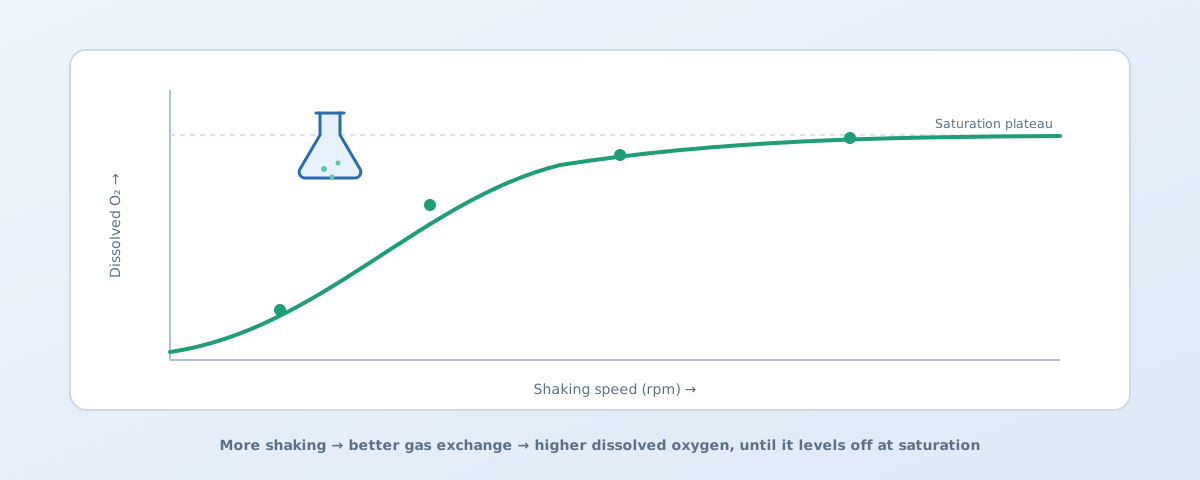
In suspension culture, shaking is the main way to supply oxygen. It continually renews the gas-liquid interface so oxygen dissolves into the medium. Within reason, raising speed, increasing amplitude or reducing fill volume all raise dissolved oxygen (DO) — but avoid excessive shear on cells.
Where dissolved oxygen comes from
- Most flask cultures get oxygen via gas exchange at the surface; shaking renews the interface and improves dissolution.
Factors affecting DO
- Speed and amplitude: higher generally means higher DO.
- Fill volume: less liquid means a relatively larger surface and higher DO.
- Vessel design (e.g., baffled flasks) and closure breathability also matter.
Finding the balance
- DO must be sufficient, but too-high speed causes shear damage — optimize per organism, and pair with constant temperature for stable metabolism.
Related Products
- Orbital Shaking Incubator 703/703R →
- Orbital Shaker 721-1T/721-2T →
- Reciprocating Shaking Water Bath 903/903XL →
FAQ
How to raise dissolved oxygen?
Within reason, raise speed and amplitude, reduce fill volume, or use baffled flasks and breathable closures.
Does fill volume affect DO?
Yes. Less liquid means a relatively larger surface and better gas exchange, usually raising DO.
Is faster always better?
No. Too-high speed causes shear damage; balance per organism.