Temperature & Optics
What Is Infrared Emissivity? Why It Affects Measurement
Updated 2026-06-13 · Hotech Technical Team
In short
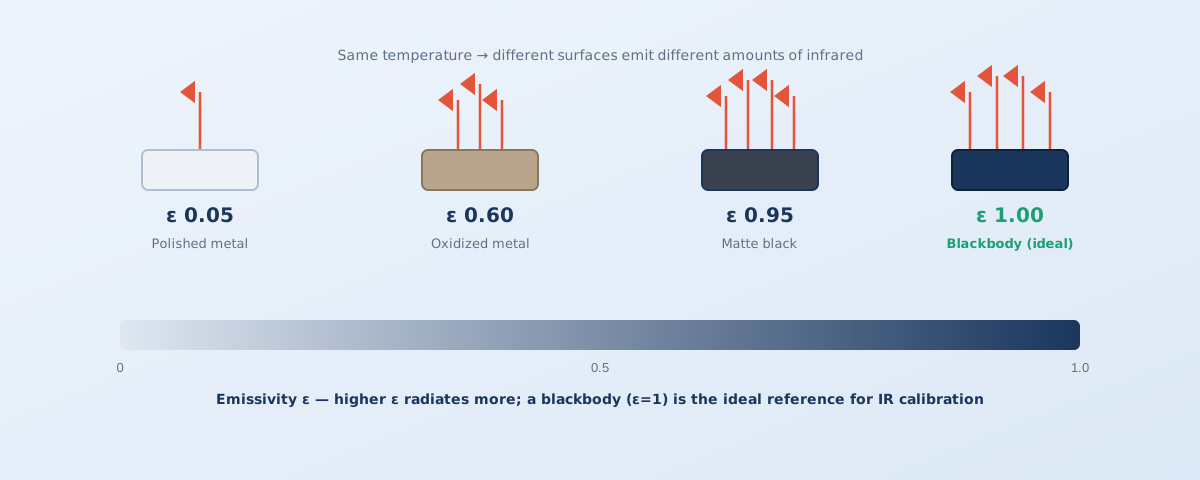
Emissivity is the ratio of an object's thermal radiation to that of a blackbody at the same temperature, between 0 and 1. It is the key parameter in infrared measurement — different surfaces have different emissivity, so if the instrument's emissivity setting is wrong, the reading is off.
Definition
- Emissivity ε = object's radiation ÷ blackbody's radiation at the same temperature. Ideal blackbody ε = 1; polished metals are low (about 0.05–0.3); most non-metals and coatings are high (above ~0.9).
Why it affects IR measurement
- An IR thermometer needs the correct emissivity to convert radiation to temperature; shiny, low-emissivity metal surfaces are especially hard to measure accurately.
Far-infrared emissivity testing
- Assesses a material's emission in the far-infrared band, useful for industrial measurement, energy-saving materials and thermal textiles. Hotech's EMS302M is a far-infrared emissivity analyzer.
Related Products
FAQ
What is the range of emissivity?
Between 0 and 1. Ideal blackbody is 1, polished metals are low, non-metals and coatings are mostly high.
Why are metals hard to measure with IR?
Polished metals have low emissivity and strong reflection, so IR readings are easily distorted by reflected ambient radiation.
What if emissivity is set wrong?
The instrument converts radiation using the wrong basis, giving readings that are too high or too low.